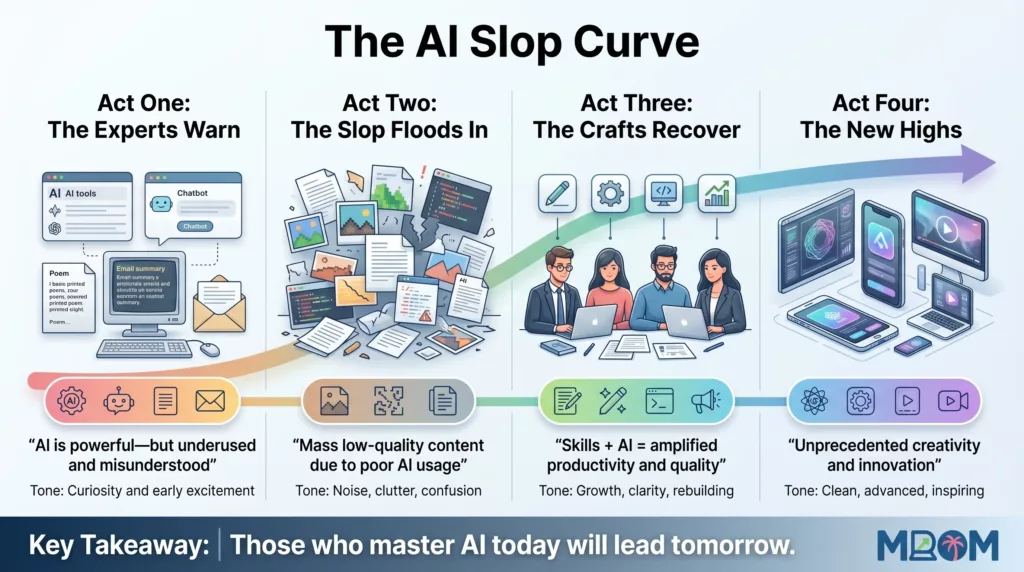
AI Jobs Growth Overview:
AI gets a lot of attention for the jobs it replaces, but the growth in AI-related roles tells a bigger story. I see more companies than ever building teams around AI skills, creating new roles in industries ranging from healthcare to media. The focus isn’t just on coders or engineers. It’s about real world problem solvers who know how to work alongside AI tools for better results. This shift has opened up loads of opportunities that didn’t exist even a few years ago, with companies eager to find employees ready to work in this fast changing landscape.
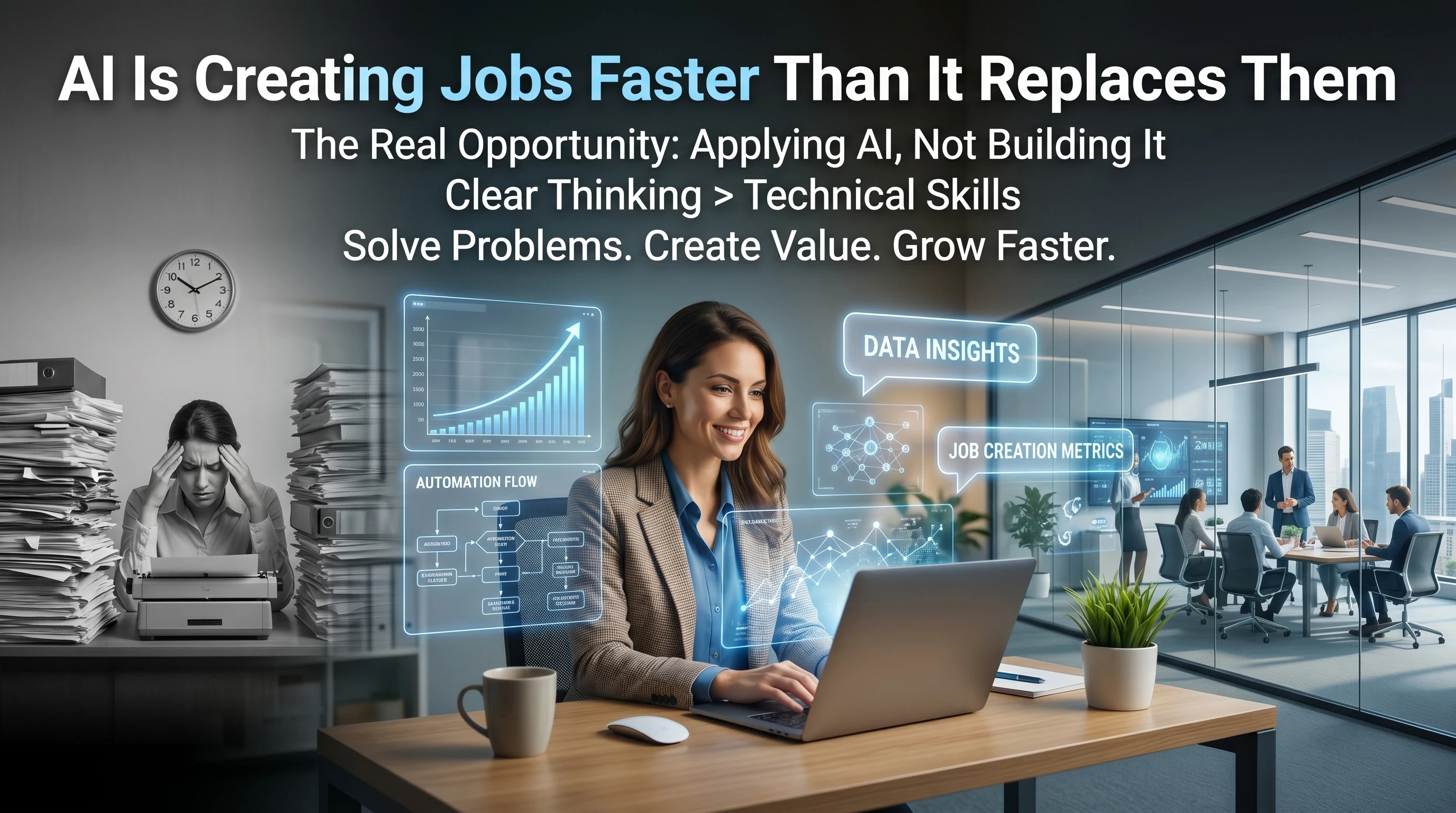
How AI Creates New Work Opportunities
It’s easy to imagine AI as a job stealer, but I’ve watched the opposite happen in many fields. As routine tasks get automated, businesses need people who can interpret data, design AI driven processes, manage ethical guidelines, and explain solutions to nontechnical teams. New roles like AI trainers, data annotators, prompt engineers, and AI product managers are popping up. Even classic jobs like marketing or HR look different. Folks now use AI to uncover patterns, write content, screen candidates, and more. It’s about working smarter, not just faster. This shift provides both entrylevel and experienced professionals the chance to use AI to give a boost to their work in meaningful ways.
Upsides and Downsides to the Switch Up
The growing AI job market has real perks: faster workflows, new career paths, and more opportunities for creative and strategic work. But change isn’t always easy. Not everyone has easy access to upskilling or AI education, and there’s plenty of confusion about how to get started. Some jobs have faded away, especially those focused on repetitive tasks. Keeping up with AI’s rapid glowup can be a challenge, too. For professionals already in the workforce, learning new tech can seem overwhelming, but the abundance of online resources helps smooth the way.
Who Benefits Most From AI Driven Jobs?
People who are curious, adaptable, and open to learning new tech tend to get ahead in this job landscape. I’ve noticed that folks with crossdisciplinary skills, like teachers using AI for lesson plans or sales pros crunching customer data, really shine. You definitely don’t need to be a hardcore coder; understanding practical uses and having good communication skills often matters more. Entrylevel roles, creative thinkers, and lifelong learners have plenty to explore, and new AI powered tools often make it easy for non experts to jump in and get started.
Limitations and What to Watch For
AI isn’t a magic fix for everything. Some areas, like small local businesses or jobs requiring handson physical work, won’t see the same explosion in AI roles. Biases in AI systems and privacy questions still show up in daily use, so people entering the field need to stay aware and keep learning. Luckily, there are a lot of accessible resources and training programs now, which make it easy to start learning. Educators and organizations continue to step up with free courses and tutorials, helping more people get involved.
Comparing AI Roles to Traditional Positions
AI jobs might sound next level cool, but a lot of them build on traditional roles. For example, an AI business analyst often draws on skills similar to a classic business analyst, but adds experience with machine learning tools. The main difference tends to be the pace; things change quickly, and there’s a bigger focus on solving open ended problems. Compared to standard desk jobs, AI focused roles can be more flexible and offer more room for creative thinking. Companies reward those who can adapt fast and keep learning new AI tools or skills as they appear.
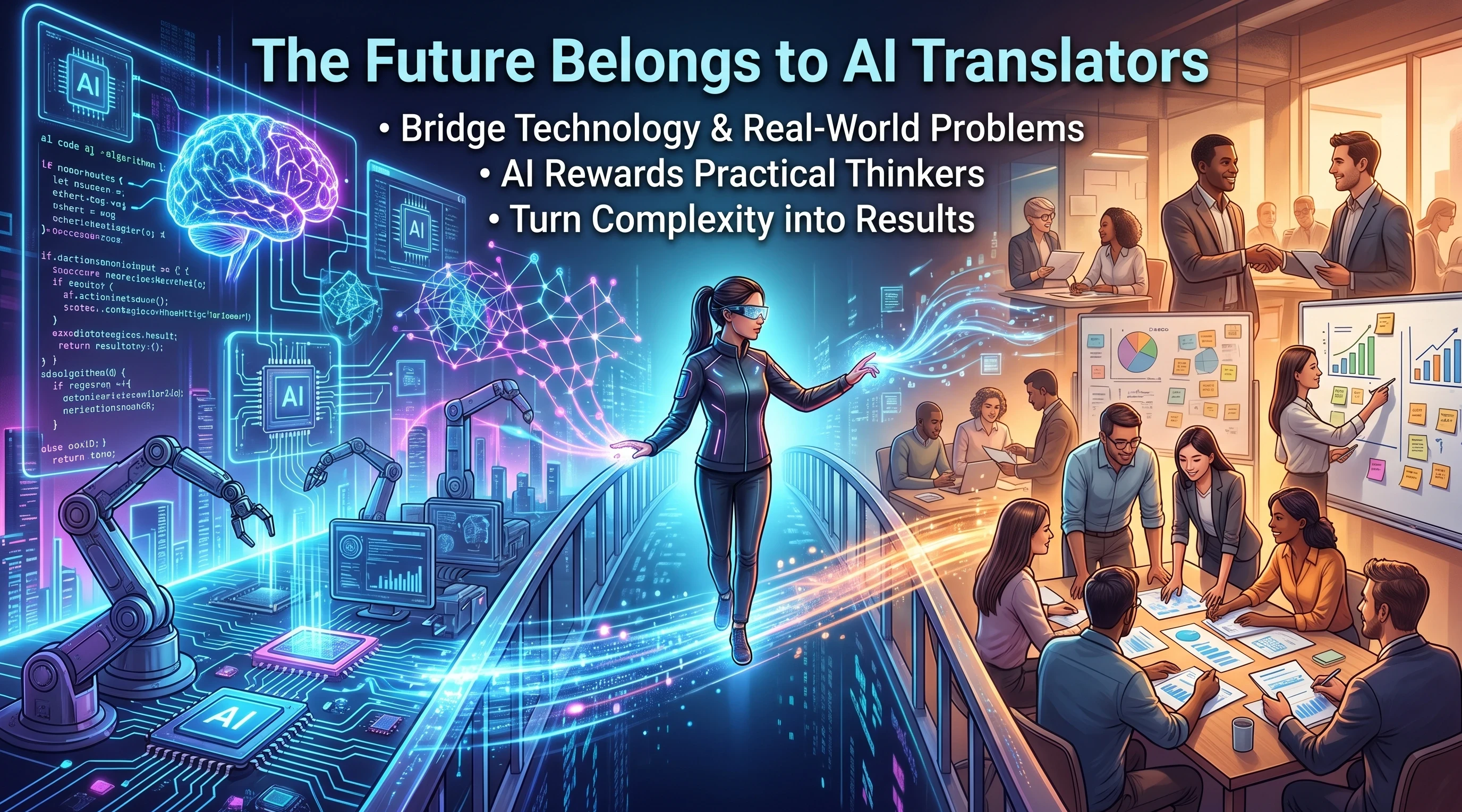
How to Get Started in the AI Jobs Market
Starting a career in AI doesn’t mean you have to return to school for years. There are online bootcamps, free tutorials, and community groups that make breaking in pretty approachable. I recommend learning the basics of how AI works, then focusing on how it ties into your field. Gaining hands on practice with real projects, like data analysis or prompt engineering, helps you stand out in the job market. Curiosity and a willingness to tinker are more valuable than a fancy degree. Anyone from arts majors to engineers can find a spot in the AI field if they stay motivated and keep learning.
Wrapping Up and My Suggestions
The AI job wave is real, and there’s a spot for pretty much anyone willing to upskill and stay flexible. Whether you’re a student or thinking about a career switch, learning to use AI thoughtfully opens up a lot of career doors. Staying adaptable, focusing on solving real world problems, and practicing with the latest tools puts you in a great spot to benefit from AI’s ongoing growth. The trend doesn’t seem to be slowing down soon, so now is an ideal time to get into the field and see what opportunities you can stumble upon.
FAQs
1. Is AI really creating more jobs than it replaces?
Yes. While AI is automating certain repetitive tasks, it is simultaneously creating entirely new roles. These include AI specialists, prompt engineers, automation consultants, AI content strategists, and more. Most importantly, it is expanding opportunities for people who can apply AI to real-world problems, not just build it.
2. What types of jobs are growing because of AI?
AI is driving demand for roles such as:
- AI tool consultants
- Workflow automation specialists
- Content creators using AI
- Digital marketers leveraging AI tools
- Business process optimizers
These roles focus on practical implementation, not deep technical development.
3. Do I need to learn coding to benefit from AI?
No. This is one of the biggest misconceptions.
While coding can help in advanced roles, most opportunities today are in using AI tools effectively, not building them. Many successful professionals are leveraging AI without any programming knowledge.
4. What skills are most valuable in the AI era?
The most valuable skills today are:
- Clear thinking and problem-solving
- Understanding real-world business challenges
- Creativity and idea generation
- Communication and the ability to simplify complex tools
- Adaptability and willingness to learn
AI enhances execution, but human direction is what makes it valuable.
5. Why are businesses struggling to use AI effectively?
Most businesses already have access to powerful AI tools. The challenge is:
- Lack of clarity on where AI fits
- Uncertainty about trusting AI outputs
- No structured workflows for implementation
This creates a major opportunity for individuals who can guide businesses in using AI practically.
6. What does it mean to “bridge the gap” with AI?
Bridging the gap means:
- Understanding what people are already doing
- Identifying inefficiencies or friction
- Applying AI to improve speed, quality, or results
Instead of focusing on the technology itself, you focus on real outcomes.
7. Is AI a threat to traditional jobs?
AI is more of a transformer than a destroyer.
It replaces:
- Repetitive tasks
- Slow manual processes
- Inefficient workflows
But it rewards:
- Strategic thinking
- Creativity
- Problem-solving
Those who adapt will find more opportunities, not fewer.
8. How can beginners start using AI effectively?
Start simple:
- Choose one area (content creation, marketing, research, etc.)
- Use AI tools to assist—not replace—your thinking
- Focus on solving real problems
- Practice consistently
The goal is not perfection—it’s practical application.
9. How can AI help in building an online business?
AI can help you:
- Create content faster
- Generate ideas and strategies
- Automate repetitive tasks
- Improve customer engagement
- Analyze data and trends
When used correctly, AI becomes a powerful growth partner in any online business.
10. What industries can benefit from AI?
Almost every industry can benefit, including:
- Marketing and advertising
- Healthcare
- Education
- Finance
- E-commerce
- Content creation
- Consulting
AI is not limited to tech—it’s a tool for every niche.
11. Why do many people feel overwhelmed by AI?
Because there are:
- Too many tools
- Too much information
- Not enough clear direction
Without structure, AI can feel confusing. With the right guidance, it becomes incredibly powerful.
12. What is the biggest opportunity right now?
The biggest opportunity is not in building AI—but in:
- Helping people use AI effectively
- Solving real problems with AI
- Simplifying complex tools for everyday users
This space is still wide open and growing rapidly.
13. Can AI replace creativity and human thinking?
No. AI can assist creativity, but it cannot replace:
- Human experience
- Judgment
- Purpose
- Vision
AI amplifies human thinking—it doesn’t replace it.
14. How can I stay relevant in an AI-driven world?
To stay relevant:
- Focus on learning how to apply AI
- Keep improving your thinking and problem-solving skills
- Stay adaptable
- Combine AI with your existing knowledge or passion
The future belongs to those who learn and apply quickly.
15. What is the key mindset shift needed for AI success?
Stop asking:
❌ “How does this tool work?”
Start asking:
✅ “How can this solve a real problem?”
That simple shift changes everything.
If you’re ready to learn how to actually use AI to build income and real skills, this is the best time to start. Don’t just watch the shift. Be part of it. Try one few some of the following Generative AI applications.
Generative AI applications include chatbots such as ChatGPT, Claude, Copilot, DeepSeek, Google Gemini and Grok; text-to-image models such as DALL-E, Firefly, Stable Diffusion, and Midjourney; and text-to-video models such as Veo, LTX and Sora.
Paul, M.