The AI Slop Curve: What It Is and Why It Matters
Chances are, by now you’ve heard a lot about artificial intelligence and how it’s changing everything. But most people don’t realize there’s a major gap forming; this gap quietly separates people who truly get what’s happening from those who are just dipping a toe in. That gap is what I call the “AI Slop Curve.” I’ve seen it in my own life, and I see it everywhere online. While the technology keeps moving at a rapid pace, most people are still stuck at the starting line, making it easier than ever to fall behind.
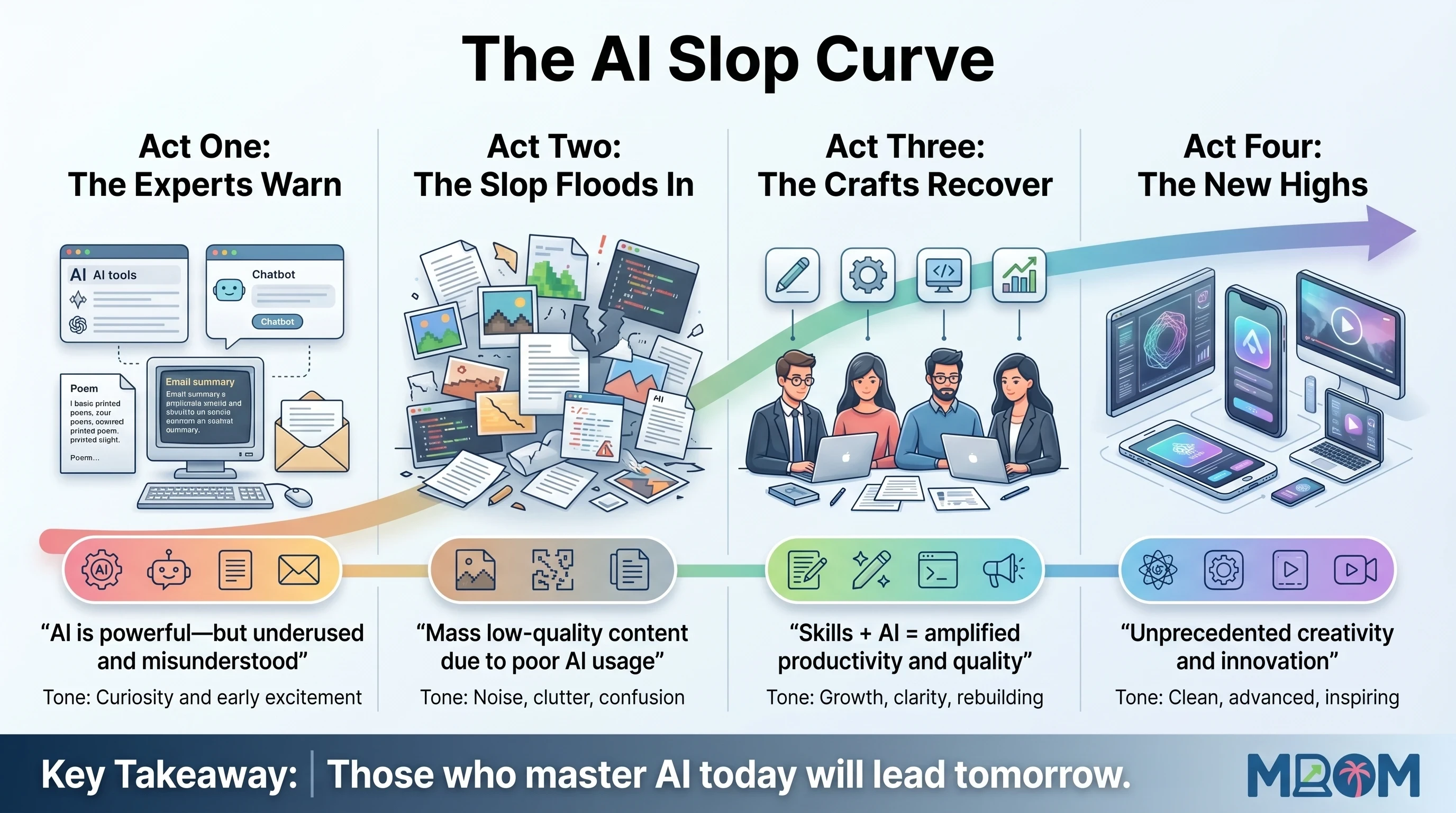
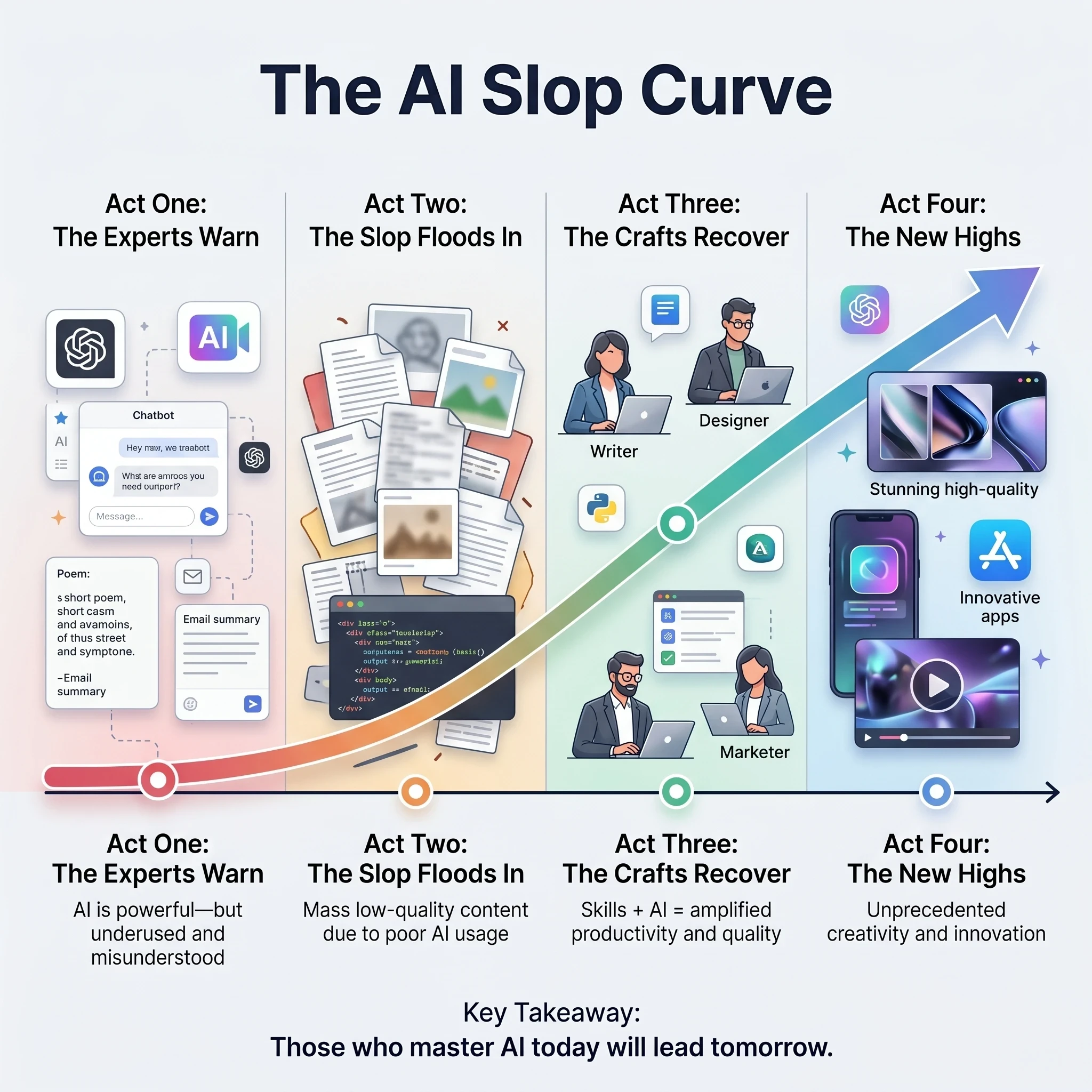
The AI Slop Curve is all about how AI adoption starts with excitement, then hits a stage filled with low quality noise, and eventually settles into a phase where people who stick with it leap way ahead. If you want to actually use AI to get ahead at work, in business, or just to save time, there are some things you really want to know. I’ll break down how we got here, why the slop is everywhere, where things are headed, and what you can actually do to stay in front during the AI boom.
- The AI Slop Curve Explained: Why Most People Fall Behind in the AI Boom
- What Is the AI Slop Curve? How to Stay Ahead While Others Fall Behind
- The AI Slop Curve: The Hidden Gap Separating AI Winners and Losers
How the AI Slop Curve Came to Be
I remember when ChatGPT first dropped. The buzz online was wild, and people everywhere started playing with it to write poems, answer questions, or summarize their emails. I did the same. At first, it felt a lot like a party trick. But everything changed when I started using it more seriously to help organize big projects, brainstorm business ideas, and even debug code. That’s the point where I started seeing what AI was truly capable of. The tech didn’t just get better. My work and productivity did too. The gap between casual users and people getting into it more deeply grew bigger every month.
The AI Slop Curve became even steeper when new models rolled out, and suddenly everyone had access to generative AI. But instead of thoughtful and custom use, the internet was hit with a wave of generic outputs, copy-paste content, and people selling cookie cutter AI courses. All this noise made AI seem less impressive, especially to newcomers. But below the surface, the people investing time to learn how to use these tools properly were getting real value and growing their skills.
Why Most People Are Getting Stuck or Falling Behind
If you’ve used any AI tool recently, you’ve probably noticed all sorts of quick hacks, templates, and click to generate tools out there. The problem is that using AI this way rarely leads to anything really helpful, practical, or valuable. Most people get stuck in this phase, treating AI as a novelty. They try a few copy-paste prompts, get so-so results, decide it’s overrated, and move on.
This stage is where the “slop” kicks in. People looking for shortcuts funnel low quality content and weak ideas into the world. It’s easier than ever to make things, so the web gets filled with spammy writing, bland images, and recycled info. Meanwhile, people who are learning how to guide, tweak, and really build on what AI can do are quietly moving forward at a different speed.
The gap isn’t about knowing a secret code. It’s about moving past the surface and layering your own skills, goals, and strategy on top of what AI can do. The more intentional you are about what you give the AI, the better (and more unique) your results get. I’ve seen people waste hours trying to get a simple answer, while others use the same tool to automate complex workflows or build new products.
The Slop Flood: Too Much Content, Too Little Skill
Right now, AI powered tools are everywhere. There are image generators, writing assistants, code helpers, and more. But most of the output online looks the same: basic, forgettable, and often a bit off. Why? Because people think AI replaces expertise, when in reality, it multiplies the value of the expertise you put in.
I’ve seen businesses pump out generic blog posts and marketers run endless ads, all powered by AI. What’s missing is craft. Tools are only as good as the hands using them. If you see AI as a shortcut instead of a teammate, you end up just adding to the noise. But people who guide AI, shape and edit its responses, and combine their own skills are getting results that stand out, even as the noise grows.
Who’s Actually Winning Right Now?
People who choose to dig into their skills are the ones jumping in front. Programmers are using AI to speed up development, graphic designers are brainstorming with image generators, and entrepreneurs are automating small tasks to focus on big ideas. These people use AI as a base layer, and their impact grows as they combine the tool’s speed with their own creativity and eye for quality.
This isn’t about being a tech prodigy. It’s about dedicating some time to play, experiment, and build confidence. The best results happen when you bring your own understanding of needs and goals, then use AI to boost or scale up what you’re already doing. Staying ahead means turning AI from a fast answer machine into a real teammate that lifts you up.
Common Pitfalls: What Holds People Back
Some assume that using AI will make you instantly more productive or creative. The truth is a bit messier. Here are a few classic traps I see all the time:
- Sticking with basic prompts and never experimenting
- Trusting AI outputs without double-checking or editing
- Using AI as a replacement for learning rather than a support
- Overlooking privacy issues or copyright risks
- Never revisiting or adjusting your approach after weak results
Getting past these roadblocks is key if you want AI to actually help your work and life. I’m still learning new ways to use it every week, and I’ve found that being curious, testing things, and being open to feedback pays off.
AI vs. Other Productivity Tools: What’s Different?
AI isn’t just another productivity booster like a calendar app or note taker. While other tools help you organize and store ideas, AI can actually create, blend together, and generate outputs in totally new ways. Whether you’re brainstorming, automating, or finding insights, the best results come when you combine your existing toolkits with your AI teammate. I like to stack AI with other apps I already use. This keeps things efficient but makes sure I understand what’s going on.
Other productivity tools tend to be “set it and forget it” options. With AI, you get more value by checking back in, changing how you use it, and letting it learn alongside you. That two way street is what makes it uniquely powerful, and different from other tech upgrades out there.
Getting Started: How to Actually Stay Ahead
If you’re feeling a bit left behind or overwhelmed by AI, you’re definitely not alone. Here are a few tips that have helped me keep moving forward:
- Schedule “practice time” with AI tools each week, even if it’s just half an hour
- Pick one real life problem to solve, and use AI to brainstorm possible solutions
- Save and organize your most helpful prompts or workflows so you can reuse your best ideas
- Follow creators or communities who share honest experiments and even failures, not just success stories
- Always double-check AI responses for accuracy, especially on important topics
- Mix your own experience with AI, and don’t hesitate to drop results that don’t work
The core skill isn’t knowing every tool. It’s getting comfortable with learning and adapting as you go. If you treat AI as a growing part of your toolkit, not a one-off thing, you’ll keep moving forward as the tech keeps leveling up.
Bottom Line on the AI Slop Curve
We’re somewhere in the messy middle now: lots of hype, plenty of slop, and a growing group of people building real results with AI. The curve is only getting steeper as the technology grows.
If you’re reading this, you can definitely catch up and stay ahead. It’s all about showing up, practicing, moving beyond the early noise, and building your own path step by step. The people who stay curious and keep experimenting are the ones who’ll ride the next wave instead of getting left behind. And that’s a genuinely exciting spot to be in right now.
FAQ
What is the AI Slop Curve?
The AI Slop Curve describes the gap between beginners using AI poorly and advanced users using it strategically for real results.
Why is AI content becoming low quality?
Because many users rely on copy-paste prompts without adding expertise or editing.
How can I get better at using AI?
Practice consistently, refine prompts, and combine AI with your own skills and knowledge.
Paul, M.