If you have been publishing articles and wondering how any of them lead to a commission, you have a problem a content plan solves. Each article may be fine on its own, but nothing connects them to each other or to a decision a reader can make.
A content plan for affiliate marketing is a short written document that says who you write for, what that person is trying to decide, and which article helps them at each stage. It takes about an hour to draft the first version. I use this worksheet myself, and you can complete it with a pen and paper.
Why a pile of articles is not a content plan
A pile of articles has no order. You write about whatever you thought of this morning, publish it, and start the next one. A reader who lands on one article has no reason to read a second, because nothing points them there.
A plan answers three questions before you write anything:
- Who is this article for?
- What is that person trying to decide?
- What should they do right after reading?
Without answers, you get articles that attract visitors who never act. A post titled “What Is Affiliate Marketing?” can bring many readers, but it does nothing for your earnings if it ends without an invitation to read anything else. The traffic arrives and leaves.
An affiliate commission comes from a reader making a decision: trying a product, signing up for something, buying through your link. That decision rarely happens on the first visit. Readers usually move from not knowing you to knowing a little, then to trusting you a little, then to acting. A content plan lays out that sequence on purpose so each article carries the reader one stage further.
Earnings depend on many things outside your control, including search rankings, competition, and the reader’s own circumstances. A plan can’t promise a result. It makes your effort add up instead of scatter.
Start with one reader and one decision
Before you plan any article, write down one reader and one decision. Pick a specific person, not “beginners” or “people who want to make money online.”
Describe them in a few lines:
- What do they already know about your topic?
- What worries them?
- What are they trying to choose between right now?
- What would make them feel the choice was a good one?
Then write the decision as a single sentence: “This reader is deciding whether to ______.”
Here is an example from a different niche, so you can see the shape. Suppose a site teaches home baking. The reader is someone who has baked a few loaves and is deciding whether to buy a proven sourdough starter kit or grow a starter from flour and water. The worksheet would read: “This reader is deciding whether to buy a starter kit or make their own.” Every article on that site now has something to serve.

For a site about affiliate marketing for beginners, the decision might be “whether to try a free account on a training platform before spending money.” Or it might be “whether to pick a niche now or keep researching.” Either works. The point is that it is one decision, stated plainly enough that you could explain it to a friend.
Choose the decision the reader has not made yet. If your reader has already chosen, there is nothing for your content to help with. If they are still choosing, every article you write is useful to them.
If you are unsure about your niche, this guide to picking your first affiliate marketing niche can help you settle that first. The plan works better once the niche is chosen.
Map the reader’s path: discover, learn, trust, try
Readers move through four stages on the way to a decision. Name the stages once and your planning gets easier, because each article can be assigned to one of them.

Discover
At this stage the reader does not know your site exists. They have a question and are searching for an answer. Articles here answer a specific, simple question: “What does this term mean?”, “Is this safe?”, “How long does this take?” The next step you offer is usually another article on the same topic. You are not asking for anything yet.
Learn
The reader now has some basics and wants depth. They compare options, read how-to guides, and want to understand the process. Articles here teach: tutorials, explainers, comparisons. A glossary page such as Affiliate Marketing Terms Explained is a typical learn-stage page, since it helps a reader who keeps meeting words they don’t understand.
Trust
The reader has read enough to ask whether you know what you are talking about. Articles that build trust show your reasoning, state limits and costs, and explain who a product is not right for. A review that lists only strengths does not build trust. A review that says “this suits you if X, and not if Y” does. Honest expectations belong here too, and they matter because readers are often cautious after bad experiences elsewhere.
Try
The reader is ready to act, and the best action is the smallest one that gives them real information. That could be a free account, a trial, a sample, or a low-cost first purchase. Articles at this stage explain exactly what the reader will see when they try it, what it costs, and what to check before they decide anything more.
The word “try” is chosen on purpose. Your content can invite a reader to try something and see for themselves. It cannot promise they will succeed, earn, or be satisfied. Keep that distinction in every sentence you write at this stage.
Not every reader moves through all four stages, and not every article needs to touch each one. The map is for planning your coverage: if you have twelve discover articles and nothing at the try stage, your plan has a gap.
Give every article one job and one next step
Each article gets a job and a next step. Write both before you start drafting.
The job is what the article does for the reader, in one sentence. For example:
- “Helps a reader understand what a commission is and how it is paid.”
- “Shows a reader what to check before trusting a review.”
- “Walks a reader through creating a free account and what they will see first.”
If you cannot state the job in one sentence, the article is trying to do too much. Split it into two articles. This is also good for search, since a page that answers one question well tends to serve a reader better than a page that half-answers five.
The next step is the single action you want the reader to take when they finish. Make it match the stage:
Stage Typical next step Discover Read a related learn-stage article Learn Read a comparison or a trust-stage article Trust Read the try-stage article for the option you recommend Try Create the free account or start the trial
Choose one next step per article, not three. When an article offers four links of equal weight, readers tend to take none. One clear sentence at the end works better: “If this made sense, the next article covers how to compare two options without getting overwhelmed,” with a link on the title.
The next step also has to be honest. Do not send a reader to a sales page when they have only just learned what a term means. Move them one stage at a time, at the pace their questions suggest.
A short template you can copy into a note for each article:
- Reader: (the one reader from your worksheet)
- Stage: discover, learn, trust, or try
- Job: one sentence
- Next step: one link and the sentence that introduces it
If you fill in those four lines before writing, drafting goes faster, because you already know where the article is heading.
Group your articles so they point to each other
Once you have several articles, sort them into groups by topic. A group is a main article on a broad question plus several smaller articles that each answer a narrower question within it.
For the baking example, the main article might be “Starter kit or homemade starter: how to decide.” The supporting articles would cover what a starter needs to stay alive, what a kit usually includes, how long a homemade starter takes before it is usable, and what can go wrong. Each supporting article links to the main one, and the main one links back to each supporting article.

That linking does two things. It gives the reader a clear route to the next relevant page, and it shows search engines that those pages belong together. It also makes your plan visible: you can look at a group and see whether it has articles at each stage.
A few practical rules for grouping:
- Keep a group to one decision. If a group covers two decisions, it is two groups.
- Link in both directions. Supporting articles link up to the main article, and the main article links down to each of them.
- Use plain anchor text. Write the link on words that describe the page, such as “what a commission is and when it is paid,” not “click here.”
- Link only where it helps. One well-placed link beats five that interrupt the reader. A page like Understanding Affiliate Commissions and Payouts is worth linking from the spot where a reader first meets the word “commission,” not from every paragraph after.
Two kinds of pages are easy to confuse with a group. Sales funnel pages built with software are a different job, and a separate guide covers sales funnels with AI tools. General tip lists, like the best affiliate marketing tips for beginners, serve a different purpose too: they give a quick overview, while a group in a content plan is built around one decision.
Where to mention Wealthy Affiliate honestly, with disclosure
If you recommend a product, your plan needs to say where. A recommendation belongs at the try stage, and sometimes at the trust stage as part of an honest review. It should not appear in a discover-stage article that only answers a definition question.
I recommend Wealthy Affiliate on this site, and I earn a commission if a reader I refer makes a qualifying paid membership payment. That is a financial interest, and readers have a right to know about it before they click. Here is how I think about doing it properly:
- Disclose near the top. Put a plain sentence before the first affiliate link, such as: “This article contains affiliate links, which means I may earn a commission if you sign up through them, at no extra cost to you.” Use your own wording, but say it clearly.
- Say what the reader can try without paying. Wealthy Affiliate offers a free Starter membership, and that is the sensible first action for a reader who wants to look around. Features can change, so tell readers to check which Starter features are current on the sign-up page before they join. Do not describe anything the reader will get unless you have checked it that week.
- Separate free from paid. If you mention a paid membership, say so, and say that the free account comes first. A reader should never feel surprised by a charge.
- State who it suits and who it does not. Someone who wants a finished website built for them does not fit a platform that teaches you to build your own. Say that.
- Make no income promises. Training and tools do not guarantee commissions. When I started in October 2018, I had been scammed three times and had no experience, and I did not earn my first commission until my third month as a Premium member. That is one person’s timeline, not a forecast for anyone else.
In your plan, mark each article that contains a recommendation and confirm it has a disclosure. If you are unsure how to handle the earnings side, this guide on setting realistic expectations as a new affiliate marketer covers what to tell readers and what to tell yourself.
Plan your first ten articles in one sitting, then check what worked after 30 days
Ten articles is enough to cover a full path for one reader and one decision. Plan them all in one session of an hour or two, so the pieces fit before you write any of them.
Here is one way to divide ten:
- Three discover articles. Each answers a basic question your reader types into a search box.
- Three learn articles. These teach the process or compare the options.
- Two trust articles. One honest review and one article on mistakes or limits.
- Two try articles. One explains what the reader will see when they take the small first action. The other covers what to check afterward before deciding anything more.
Work through it in this order:
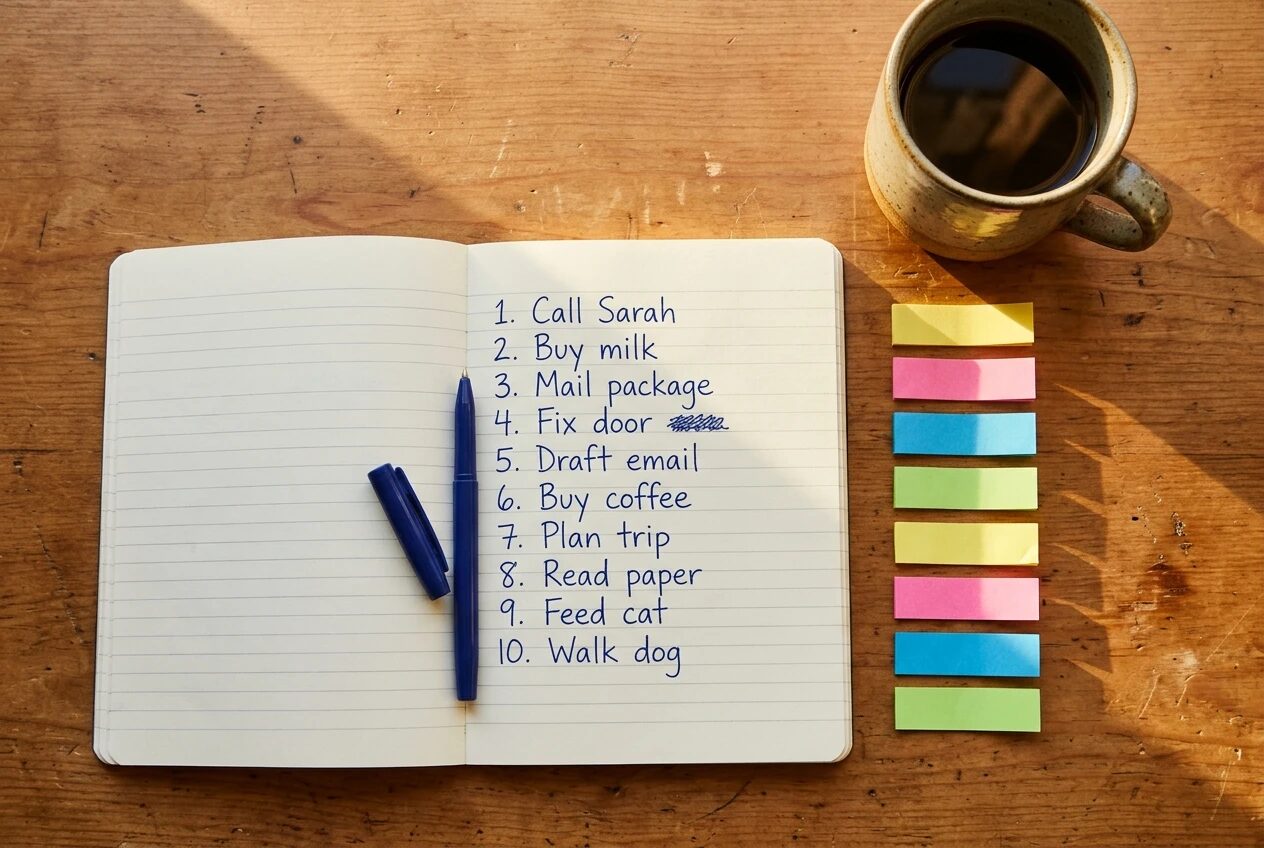
- Write the one reader and the one decision at the top of the page.
- List every question that reader would ask before deciding. Aim for twenty or so, and don’t filter yet.
- Cross out duplicates and questions that belong to a different decision.
- Choose the ten that cover all four stages.
- Fill in the four-line template for each: reader, stage, job, next step.
- Number them in the order you will publish them, with discover and learn articles first, since they support the later ones.
Then write them. You can draft and publish at whatever pace suits your week. The order matters more than the speed.
The 30-day check
After thirty days, look at what happened. Do not expect commissions as the measure. A new site often takes longer than a month to show up in search, so judge it by things you can see:
- Which articles got any readers at all, and from where?
- Did readers click the next-step link in each article?
- Did anyone ask a question you had not planned for, in a comment or an email?
- Which articles were hard to write because the job was unclear?
Use the answers to adjust. If an article’s next-step link gets no clicks, rewrite the sentence introducing it, or check that the next article actually matches what the reader wanted. If a question keeps coming up, add it to the list for the next ten. Revise the plan before writing more, because ten well-connected articles will serve a reader better than thirty that do not connect.
Next step: draft your ten-article plan in a Hub
If you would like somewhere to work through this worksheet, you can create a free Wealthy Affiliate Starter account through my link, open your first Hub, and try drafting your ten-article plan there.
Affiliate disclosure: that link is an affiliate link, so I may earn a commission if you later make a qualifying paid membership payment. It costs you nothing extra to use. Features of the Starter account can change, so check which ones are current on the sign-up page before you join.